
De-clutter Sustainably: Where Your Stuff Should Go (Donate, Repair, Recycle, or Dispose)
Blog post description.Decluttering feels great… until you’re staring at a pile thinking, “Wait—where does all this actually go?” The most sustainable declutter isn’t the fastest one—it’s the one that keeps usable items in use, keeps hazardous stuff out of the trash, and sends materials to the right recovery path. EPA’s simple rule: reduce and reuse first, then recycle what you can’t reuse. That order matters because making new products uses energy and materials, and creates greenhouse gas emissions. Below is a practical, room-by-room-friendly guide to help you move items out without moving your guilt in.
DECLUTTERRECYCLINGCLEANINGDE-CLUTTER
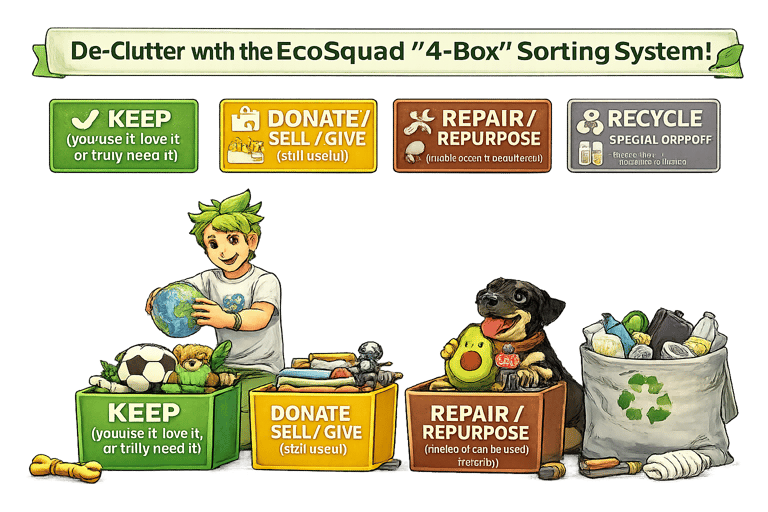
The EcoSquad “4-Box” Sorting System
Grab four boxes/bags and label them:
KEEP (you use it, love it, or truly need it)
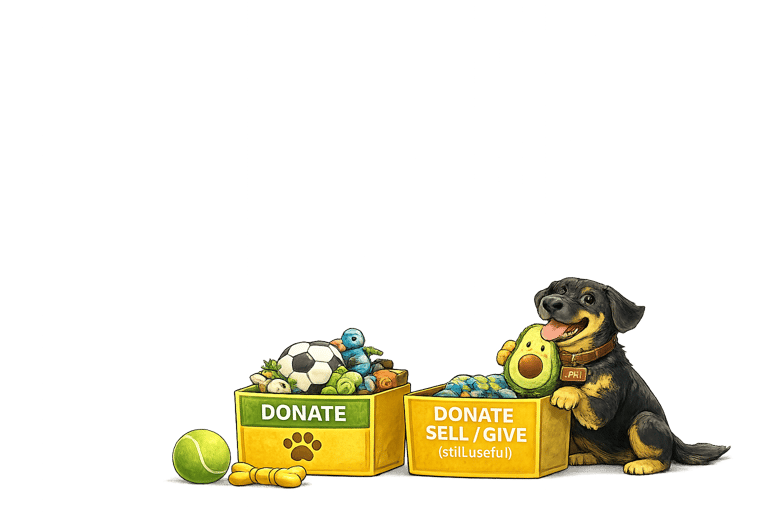
DONATE / SELL / GIVE (still useful)
REPAIR / REPURPOSE (fixable or can be used differently)
RECYCLE / SPECIAL DROP-OFF (materials or hazardous items)
This mirrors the waste hierarchy: reduce/reuse > recycle > dispose.
Step 1: Donate or Give Away (Best “bang for sustainability”)
Donate if it’s…
Clean, working, and safe
Something someone would actually want tomorrow (not “someday”)
Great candidates:
Clothing in good condition, shoes, coats
Working small appliances
Dishes, cookware, home décor
Books, toys (complete sets), tools
Avoid dumping “problem items” on donation centers—many can’t accept hazardous materials, broken furniture, or certain bulky items. (Donation rules vary by location, so check first.)
Even better than donating: local “Buy Nothing” groups, neighborhood apps, or a curb “FREE” box—because it keeps items hyper-local and avoids extra transport.
Step 2: Repair or Repurpose (Often cheaper than replacing)
Before you buy new, consider:
Clothing: buttons, hems, simple mends
Furniture: tighten screws, replace hardware
Small appliances: cords, filters, basic parts
Electronics: upgrades/repairs vs replacement
EPA specifically encourages upgrading/repairing electronics instead of buying brand new when possible.
Repurpose ideas:
Old towels → cleaning rags
Glass jars → pantry storage
Gift bags/boxes → reuse (yes, this counts!)


Step 3: Recycle (Only after reuse is exhausted)
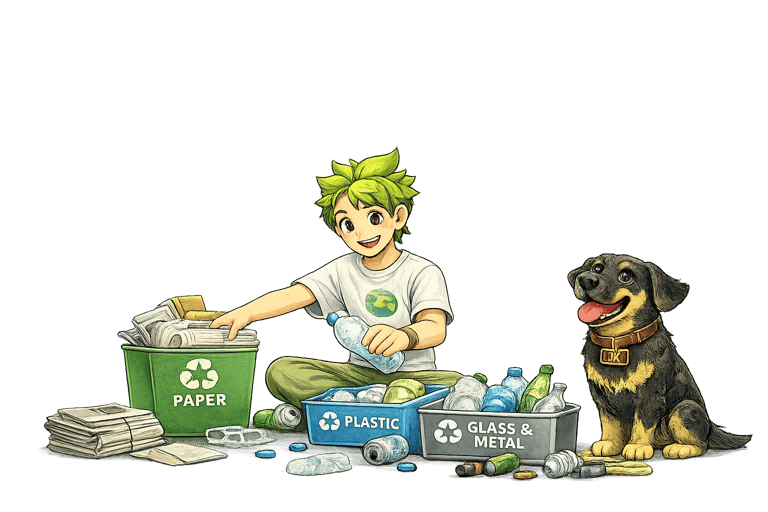
Recycling is helpful, but it’s not magic. Focus on:
Cardboard/paper (clean and dry)
Metals (highly recyclable)
Accepted plastics (varies by city—follow your local rules)
EPA notes recycling is beneficial, but it should come after reduction and reuse.
Step 4: Special Drop-Off Items (Do NOT toss these)
Some things don’t belong in curbside bins or household trash.
Batteries (especially lithium-ion)
Do not put lithium-ion batteries or devices containing them in household trash or recycling bins—fire risk is real. EPA recommends taping terminals and/or bagging batteries separately, and using proper recycling/HHW drop-offs.
Electronics (e-waste)
E-waste should be donated or recycled through proper channels. EPA recommends:
Wiping personal data
Removing batteries (recycle separately)
Finding local recycling facilities or programs
Household hazardous waste (HHW)
Items like paints, cleaners, oils, pesticides, and some batteries can contain hazardous ingredients and often require special disposal.
A Quick “Where Should This Go?” Cheat Sheet
Donate / Give Away
Clean, usable clothing; working appliances; usable furniture; kitchen goods
Repair / Repurpose
Wobbly furniture, minor clothing damage, items missing small parts
Recycle (where accepted)
Cardboard, paper, metal cans; eligible plastics; glass (depends on locale)
Special Drop-Off
Batteries (especially lithium-ion), electronics, paint, chemicals, motor oil, pesticides
EcoSquad can make de-cluttering easy (and actually sustainable)
If you want this to be fast and responsible, EcoSquad can help you:
Set up a sorting station and a “done in one weekend” plan
Identify what’s donate-worthy vs recycle vs HHW
Build a simple household system so clutter doesn’t rebound (storage + habits)
Less time guessing, less landfill, more peace.










Contact
Get in touch for a greener tomorrow
Phone
© 2025. All rights reserved.
Join EcoSquad
Get tips and updates for greener living.